Virtual Exhibition / The “Marger” Tavern
Thursday-Thursday / AUGUST 24 – SEPTEMBER 7, 2023 / Cultural Center of Nish / Officers’ Club
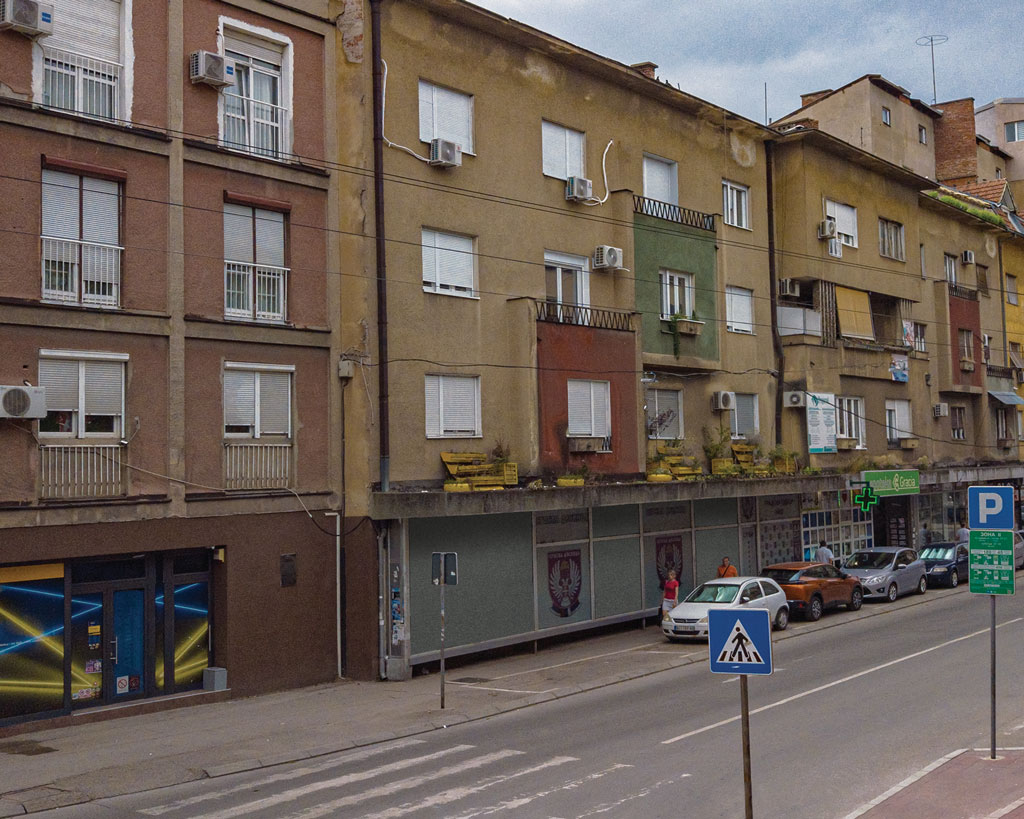
If we were to stroll down Obrenoviceva (Obrenovic’s) Street unravelling the threads of time back to the glorious days of bohemianism, as we neared the end of the street, on the corner to the left, we would see a tavern in the shade of a large, sprawling acacia tree. During the Ottoman period, it was called “Gazina,” and it was run by a man known as Djoka Marger. He gave it its famous name. Back in the day, taverns were gathering places for trade exchanges (countless contracts and deals were made in their old, musty rooms). Behind the murky tavern windows, mindless escape from the daily grind could be found as much as a space where inspiration could emerge from the bottom of a barrel if you are very lucky. In the taverns of old Nish, especially “Marger” – established as early as 1722 – conspiracies against the Ottoman regime were weaved. Later on, one could more often than not encounter Stevan Sremac, the author of “Ivko’s Slava” and “Zona Zamfirova,” when he wasn’t obliged to give classes at the lyceum. In Belgrade, he spent his days and nights in “Dardaneli” and in Nish, his favourite tavern was “Marger.”
The “Marger’’ tavern itself wasn’t all that special to look at. What made it amazing were the “primitive but warm and joyful people” who frequented it. A traditional wattle-and-daub house, it consisted of a ground floor and one upper floor, with the entrance doors facing the crossroads. In the immediate vicinity of “Marger”, there was the Orthodox Cathedral Church, so Nishlian traders, artisans, academics, idlers and wastrels, students, rogues, and genteel gentry with refined European manners often gathered for a cup of coffee or a shot of rakia, a glass of wine or two, and to rest their weary bones after the sermons. They would play cards, and chat about trade, glorious historical or current events.