Virtual Exhibition / View from the Fortress
Thursday-Thursday / AUGUST 24 – SEPTEMBER 7, 2023 / Cultural Center of Nish / Officers’ Club
Across the Nishava and along its shores, paths of various peoples have been created and intersected since ancient times. These roads bore the traces of Roman sandals, oriental caravans and diplomatic retinues, the hooves of crusading armies and explorers… Along the river, trade thrived, people strolled, love blossomed, hardships were endured, and celebrations echoed.
The first written record of this part of Nish, although the Romans had established the city much earlier, comes from the year 1096 and the time of the First Crusade. That summer, Crusader knights led by Peter the Hermit marched through the city. After crossing the bridge, Peter the Hermit and his army camped on the left bank of the river. A conflict between the locals and the German crusaders ensued, during which the crusaders set fire to two watermills on the Nishava, which, according to all indications, were located on the left shore of the river.
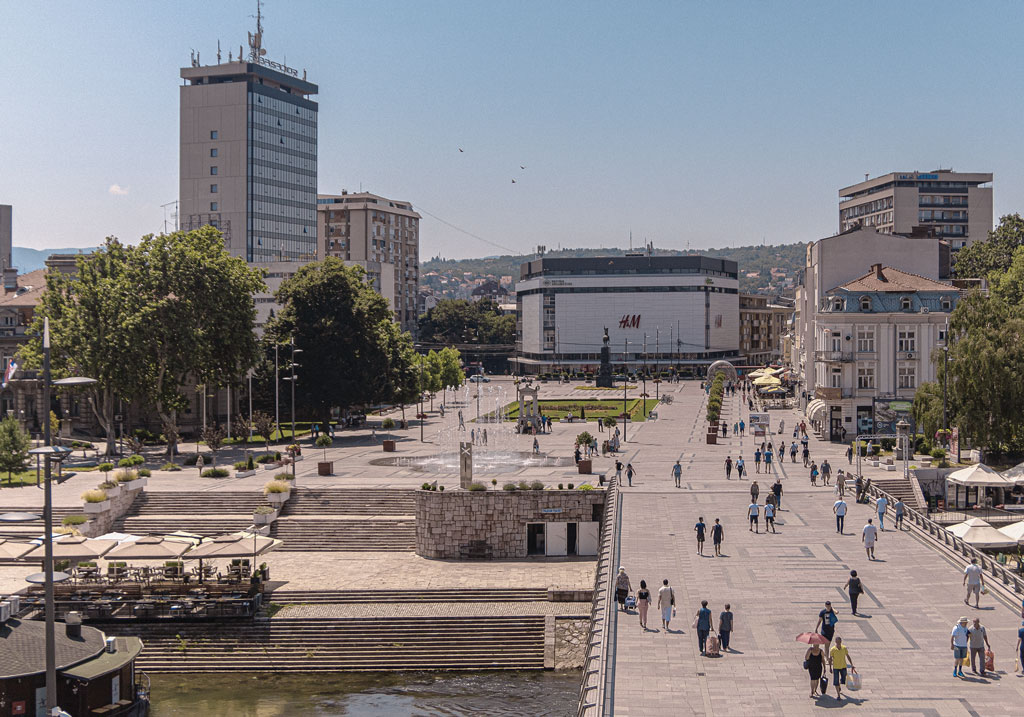
Two watermills were also there during the Ottoman age, along with the hammam of a certain Mehmed Bey, which was located on a part of the land below the fortress bridge, shops, and a large caravanserai. The first mosque built on the left side of the Nishava was Hizir Bey’s mosque. It was located in the exact spot where the Monument to the Liberators of the City was placed in 1937. The wooden bridge that connected the fortress to the shore was replaced by a stone bridge, the Tash Bridge, in the early 17th century, and the Tash mahala (settlement) grew around it. After the liberation, the oriental characteristics and shaded alleys of the Tash mahala slowly gave way to King Milan Square.