Virtual Exhibition / JEWISH STREET, DORCOL
Monday-Monday / AUGUST 22 – SEPTEMBER 17, 2022 / SASA Gallery of Science and Technology
Sephardi Jews were banished from Spain at the end of 15th century. Many of them headed east to the Ottoman Empire where Sultan Bayazit II invited them to settle wherever they wanted. Soon, Sephardi voices were heard along all the trade routes of the empire. Some of them also found new homes on Jalija, above the Danube. Israeli people, many believed, lived in this area since the time of old testament Jewish country, before Celts, and we know that they were integral part of Belgrade in 13th and 14th century, and they accepted the Sephardi in a community that was already blooming in this area. Two hundred years later, in Dorcol Mahala of the 17th century, rabbis from the Yeshiva religious school printed their books in Venice and Constantinople. Jewish St. never moved from the place that it took on maps of Belgrade during the 18th century. Near Jewish St. in today’s Visoki Stevan St. there was an old Synagogue, El Cal Viejo, since the 16th century, and lovely houses with well-kept Civut gardens lined up.
Leon Cohen, the most significant representative of symbolist painting in Serbia, was born in Jalija in 1859, although his works were largely lost during the Holocaust. With the stroke of a brush, the undisputed master of colors, this visionary merged Serbian and Jewish traditions, Greek myths and Shakespearean dramas. He cultivated an enthusiastic cult of nature, claiming that his religion was the Sun, Moon, stars and nature deities. Thanks to him, Nietzsche’s work “Thus Spoke Zarathustra” could be read in Serbian for the first time.
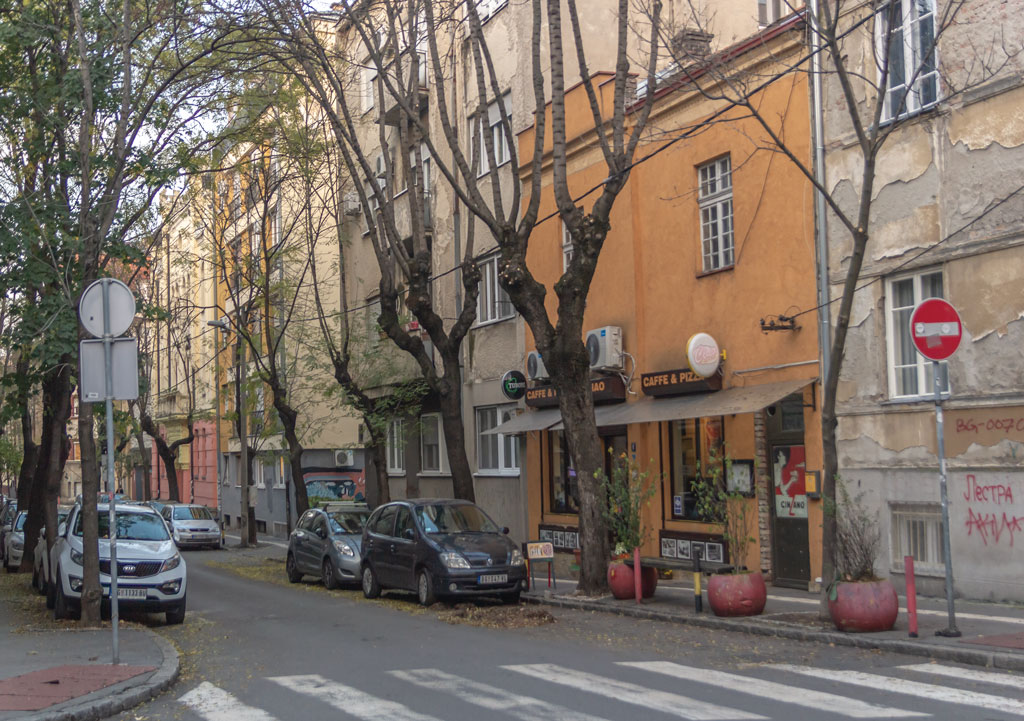
Approaching the 20th Century, wealthy Jews move up from Dorcolska Mahala and become an integral part of the new urban center of Belgrade. Their new synagogue, which in 2002 was named the “Hut of Peace”, Sukat Shalom, was completed in 1925 and is the only synagogue in Belgrade that survived after World War II. Unfortunately, during the Holocaust, Civut’s gardens, temples, singing societies, schools, as well as the artistic passions of the Belgrade Jews, were largely torn from the mythological fabric of the white city. In Jevrejska Street there is one of the buildings from the golden age of the Jewish community in Belgrade that survived the Dorcol pogrom. The Jewish Cultural Center occupies its premises.