Virtual Exhibition / THE BEGINNING OF SKADARSKA ST
Monday-Monday / AUGUST 22 – SEPTEMBER 17, 2022 / SASA Gallery of Science and Technology
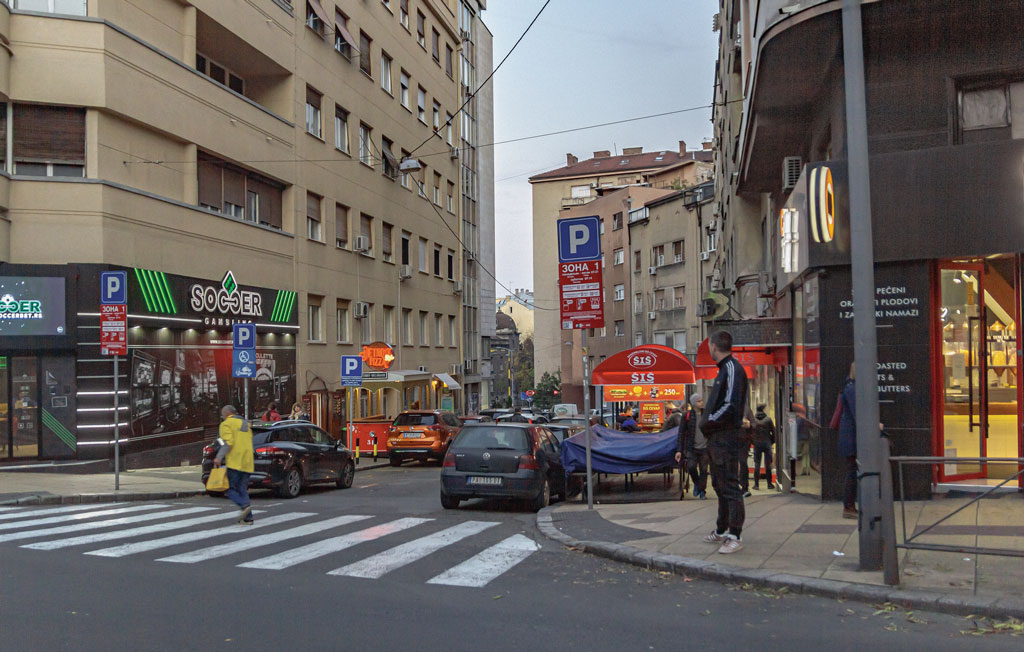
Across the street from Pasona’s “Boulevard” Skadarska street was beginning. This name for the street was used since 1872, when the numbering of houses started. It was at this place where the respectable part of the city ended and turned into a mysterious, dark suburb that was located beyond the city walls. This lasted from before the independence of Belgrade until the first half of the 19th century. That suburb, which would become the bohemian Skadarlija, was then called Sicanmala (translated as Gypsy neighborhood, for obvious reasons). When Ali Riza Pasha, in 1867, in the middle of Kalemegdan, handed over the keys to the city to Prince Mihail, on a velvet pillow, the identity of this quarter was changed. With the last Turks who left the city, the Gypsies were evicted from the slums of Sicanmala and sent to Cubura. After the Turks and Gypsies, only cobblestones remained, which many poets would later sing about.
Skadarlija was gradually settled by merchants and artisans who built the first charming chatmars and bondrucharas. After the artisans, came the taverna keepers with their families, and after them, in the area that is now much more decent, came other officials and artists. Skadarska street was completely transformed seemingly overnight, into a more city-esque place, which is why it was included in the urban plan in 1872. Nevertheless, it remained known for its casual attitude towards the rules that arrived together with the new name. In the “Guide to Belgrade” from 1909, it is stated that there were 14 taverns in Skadarska and the surrounding streets, of which the taverns at “Three hats” and “Two deer” are still operating, not much changed. Very close to Kir Djordje’s building was the “Dardanelli” tavern, opposite the very top of Skadarska Street. Nusic declared the day when the “Dardanelles” were destroyed as a day of “national mourning”. Those who could not afford to pay the bill in Pasona’s “Boulevard” would find their place in one of Skadarlia’s taverns. Especially dear guests of all those bircuz were artists around whom remembered and unremembered bohemians and lovers of poetry, painting, and drama gathered.
In the middle of the Skadarska St was a channel that divided more prestigious Dorcol from (not overly cultivated) Palilula, where regulations of public order and peace were less strict. That’s why the night owls, musicians and tipplers often found themselves running across the canals from the coppers into the safe arms of Palilula. No wonder that in an area like that a bohemian, and not a rich neighborhood, will be created before the end of the XIX century, resembling Parisian Monmartr.