Virtual Exhibition / VAROS GATE
Monday-Monday / AUGUST 22 – SEPTEMBER 17, 2022 / SASA Gallery of Science and Technology
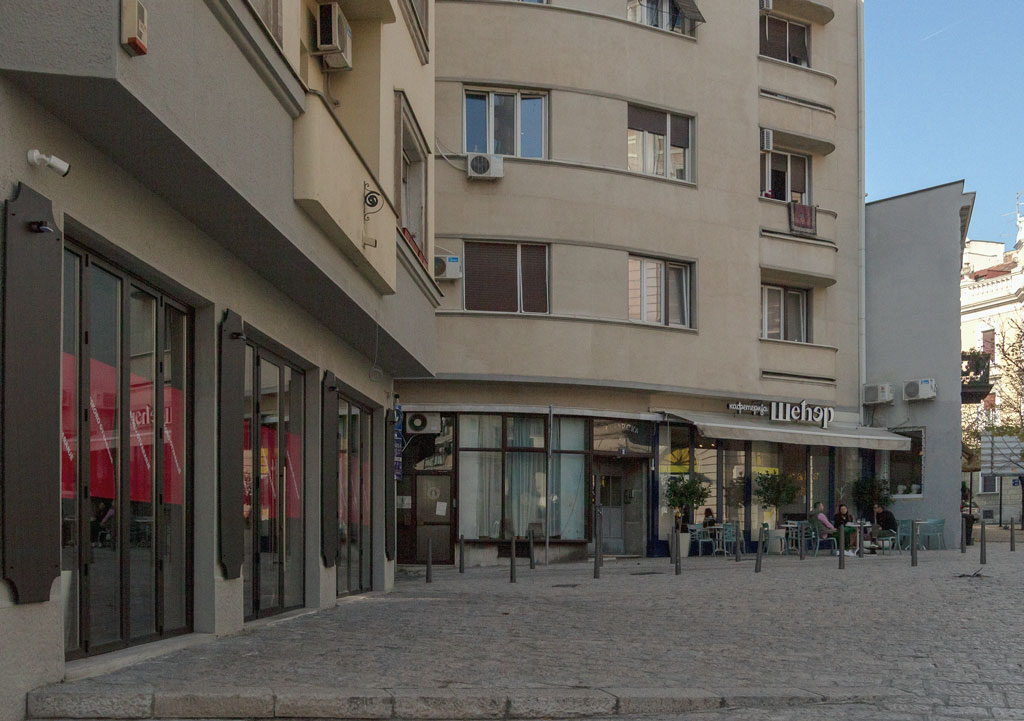
The Sava slope has been teeming with life since ancient times. For centuries, only the Serbian language could be heard in this place, unlike on the Danube side, where Turks, Cincars, Jews, Germans also walked through Dorcol-mahala… On the downhill facing the Sava, there was one of the four gates through which you entered Belgrade city.
The spirit of Belgrade was created in the legendary taverns of this town. According to Nusic, “if any kind of artistic, literary or any other initiative of public importance was to be taken, the first meetings, where thoughts would be exchanged, were at the tables of the pub.” The mass opening of taverns in the 19th century even influenced legislation. Milos Obrenovic is also known for the Ordinance on taverns, which regulated their appearance and operation, and for the first time set a tax for mechanics.
Great number of kafanas and taverns could be found around the Varos Gate, just as in other parts of old Belgrade. One of them was kafana “Black Horse”, where hajduks that were running away from winter to Belgrade, to wait for spring were meeting during the uprising days. In the taverns around the Varos gate, one could often meet the kodza, that is, the future prince, Milos Obrenovic. During the time of the Ottomans, from the Varos gate to Zeleni venac, there was a large pond into which water flowed from the surrounding hills and where ducks hid. It reflected the Serbian cemetery, whose place was occupied in the first half of the nineteenth century by today’s streets Pop Lukina, Carica Milica, Marsala Birjuzova, and others. Not far from the “Black Horse”, there was also the “Golden Horse”, as well as the legendary tavern at the “Queen of England” where actors gathered and performed plays that inspired Prince Mihailo to solemnly promise to build the National Theater.
In Pop Luka street, a certain Gruber, who came from Zemun, will open the first bakery in the area and become famous for his butter buns. Near Gruber’s bakery, at the urging of Vuk Karadzic and Dositej Obradovic, the first Belgrade bookseller opened a shop. The bookbinder Gligorije Vozarevic will print the first books for the court of Prince Milos in his house with glass windows. Few things convey the story of Belgrade through the centuries like its gates. Although we most often mention the four legendary gates through which one entered the city of Belgrade, throughout history we could come across 20 gates of Belgrade. Some of them, hidden under the pavement of a more recent date, remember even the ancient days of Singidunum when they were built by the Romans. There are also Defterder’s gate, which still overlooks the confluence of the two rivers, the outer and inner Stambol gates, Sahat gate, King’s gate, Zindan gate between the two round towers, Karadjordjeva, Dark gate, and Charles VI gates, Port gate, two Vidin gates, Sava gate , as well as the Varoš gate, around which the lifeblood of the liberated state echoed…